
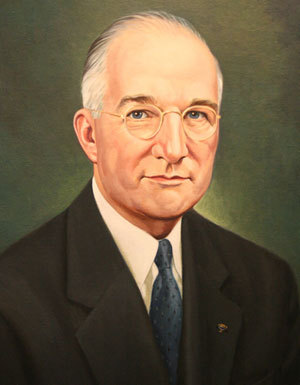
Fred Digby
Sport: Distinguished Service Award in Sports Journalism
Induction Year: 1991
A hard-working, enterprising newspaperman, Fred Digby will always be remembered as the founder of the Sugar Bowl, a project that took the better part of a decade to get off the ground but which changed the sportscape of Louisiana.
Dave Dixon, who it could also be truthfully said altered the course of sports in the state, once noted that the Saints, the Superdome, all the Final Fours that have been held in New Orleans, wouldn’t have been possible without the pioneering path-clearing of the Sugar Bowl.
Joining the staff in 1913, Digby became the sports editor of The New Orleans Item in1922. He was a reserved, quiet, fiercely independent man who worked practically every every working hour on projects he saw as for the greater good of the region’s populace.
He organized the Amateur Baseball Association, a recreational outlet for 1,500 boys; was instrumental in drawing up the 20 boxing regulations that governed the sport in Louisiana for most of a century; developed and directed an annual boxing tournament; proposed the first municipal golf course in New Orleans; sponsored the Item’s Junior Tennis Tournament; conducted an Orphans’ Football Fund which paid for their attendance at Tulane game; organized the New Orleans Quarterbacks Club; and staged boxing programs at military camps in New Orleans and Alexandria during World War I as a member of the War Training Activities Committee.
During a leave from the paper, Digby served as a steward at Sportsman’s Park in Chicago, and for a while, managed a stable of prizefighters.
Working tirelessly from 1925 on a series a ways to put on an annual game pairing exceptional football teams during the holidays – a time when the tourist season in New Orleans is slow – Digby finally found the means with attorney Warren V. Miller – a coalition of 300 guarantors pledging $100 apiece, no small sum during the Great Depression – with assurances of only one thing: their money back or its value in tickets.
From the start, the enterprise has been a resounding success, both artistically and financially, becoming a goal and reward for worthy teams, and New Orleans became a site where an inordinate number of college football national champions have been crowned.

Recent posts
-
Kathy Holloway earns ’26 Dave Dixon Louisiana Sports Leadership Award January 8, 2026

-
Gil LeBreton, John James Marshall are 2026 sports journalism inductees in LSHOF January 7, 2026

-
Third year of impactful LSHOF membership drive launches November 4, 2025


