
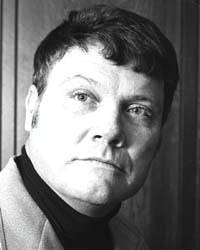
Bobby Spell
Sport: Softball
Induction Year: 1977
Induction Year: 1977
At the age of 19, Bobby Spell signed a professional baseball contract with the New York Yankees.
Three years later, he went to LSU on a football scholarship – and turned down and offer from Bud Wilkinson, who Oklahoma Sooners were on the verge of a 48-game unbeaten streak – although he never played high school football.
But Spell couldn’t afford to play professional baseball or college football. He was having too much fun (and making too much money) as the world’s greatest softball pitcher.
He doesn’t know how much money he made in softball – and it is a safe bet that they Internal Revenue Service never figured it out.
When softball reached its peak in popularity in the late 1940s, Spell was a teenage whose incredible speed attracted big crowds throughout the state – and in Southeast Texas.
With a “riser” once clocked at 126 miles per hour, Spell drew 4,000 or 5,000 spectators in small communities. He also attracted crowds of 25,000 for a game played in a football stadium in Orange, Texas, and 15,000 for a game in Port Arthur, Texas.
“That was before television, air-conditioning and Little League baseball killed softball,” Spell recalled more than 30 years later.
It was also before he developed the sinker ball that made him the world’s best pitcher.
Spell got the football offers because of his size – 6-3 and 230 pounds. When he went to LSU, Spell and Sid Fournet were the biggest players on the squad. He went out for football a couple of times at Crowley High, but never stayed with it long enough to play in a game.
The baseball contract was the result of his performances in semi-pro baseball. But Spell never took baseball seriously. From the time he was an 11-year-old boy playing in the outfield for a men’s softball team in Lake Charles, softball was his game.
A cousin, Brady Foreman, persuaded him to start pitching when Foreman – who had a 92-0 pitching record in the service during World War II – returned to Lake Charles after the war. At the age of 16, Spell quickly developed a reputation as the hardest-throwing pitcher in the state.
“If the other team got one solid hit off me, whether it was a base hit or an out, I was having a bad night,” he recalled.
Before he learned to throw a sinker ball, the peak of Spell’s career was the 1950 state tournament in Lake Charles.
“There are three for four days in your life when everything is clicking,” he said. “That was one of them. I was probably throwing 140 miles per hour that night. It was like a blur. I had 12 strikeouts in a row against a good Baton Rouge team.” He had 38 strikeouts in a 16-inning no-hitter and came back three hours later to pitch another no-hitter in the finals.
“I was crazy,” Spell recalled. “I worked thousands of hours on my physical conditioning. When I was 20 years old, I was still fighting to prove to myself I could be what I wanted to be. Anybody who makes that kind of commitment to anything is bound to be successful.”
In 1951, Spell suffered an arm injury throwing to second base.
“I used to throw with my head down,” he said. “Before I got hurt, I’d pull my head up and the ball would already be past the batter. After the injury, it would just be getting to the batter when I’d look up.”
He always referred to them as “batters” rather than “hitters.” Very few opponents were able to hit his pitches. “But if they hit the ball at all,” he recalled, “it would go 500 miles because I was supplying all the power.”
While his home team was in Lake Charles, Spell would go anywhere and pitch for anybody – for $100 a game, plus whatever went into the pots fan raised after victories.
In 1957, Spell went to Florida to pitch for the Clearwater Bombers and learned to throw a drop. Sharing the pitching load with Herbert Dudley and Eddie King, Spell took charge in the world tournament and pitched the Bombers to the championship with seven shutouts.
The following year, he pitched 87 games in leading Lake Charles to an 86-5 record but came up one run short in the finals of the world tournament as the Raybestos Cardinals beat him 1-0 on a passed ball.
Spell estimates that he played 50 games a year in his 29-year softball career before he called it quits at the age of 40.
How much money could the world’s greatest pitcher make in “amateur” softball? Over a span of five years, from 1957 through 1961, an educated guess is $180,000 – which was a lot of money at that time.
Spell was All-World three times and pitched over 200 no-hitters in his career.
His only regret was that he didn’t follow up on an idea he had in 1949. He was planning to play an exhibition game in Oakdale with a four-man team consisting of Spell, catcher Calvin Foreman, shortstop Andy Fontenot and first baseman Maxie Trahan. But it was rained out.
Eddie “The King” Feigner adopted that format three years later with a barnstorming show billed as “The King and his Court” and it proved to be a popular novelty attraction.
Feigner didn’t challenge Spell. “He had games in our area scheduled twice,” Spell recalled. “But when he found out I’d be pitching, he cancelled both of them. We offered him $10,000 in 1958, winner-take-all. But he wouldn’t play me.”
In 1976, Spell became the only Louisiana product inducted into the National Amateur Softball Association Hall of Fame.
One year later, he became the only softball player in the Louisiana Sports Hall of Fame.

Recent posts
-
Kathy Holloway earns ’26 Dave Dixon Louisiana Sports Leadership Award January 8, 2026

-
Gil LeBreton, John James Marshall are 2026 sports journalism inductees in LSHOF January 7, 2026

-
Third year of impactful LSHOF membership drive launches November 4, 2025


